

A Doctor's Guide to Night-time Routine for Dry, Sensitive Skin
More steps don’t necessarily mean more comfort. When cleansing leaves your skin tight, flaky or unsettled, adding several products at once makes it harder to tell what helps. A skincare routine for dry sensitive skin is best built around consistent, gentle cleansing and thoughtful barrier support, not a crowded shelf.
It’s understandable to feel uncertain about which ingredients and textures to choose, particularly when skin reacts easily. This guide sets out simple morning and evening steps, explains their order and covers what to consider when choosing moisturiser and sun protection. You’ll also learn how to introduce products cautiously and when persistent discomfort may call for professional advice. The aim is to replenish dry-feeling skin while keeping unnecessary irritation to a minimum.
Key Takeaways
- A skincare routine for dry sensitive skin should prioritise gentle cleansing, moisturising and daytime sun protection before optional steps.
- Tightness, roughness or stinging can help you notice how your skin responds, but these experiences alone don’t establish a diagnosis.
- Keep morning and evening care simple, choose textures that feel comfortable and follow each product’s directions.
- Introduce one change at a time, observe your skin’s response and reassess before adding anything else.
- Consider barrier-supportive options such as a ceramide night cream, while remembering that consistency matters more than the number of steps.
Skincare routine for dry sensitive skin: recognise what your skin needs
Dry sensitive skin describes dryness alongside heightened reactivity. Skin may feel uncomfortable or look flaky, while products, weather or other changes seem to trigger stinging or redness. These experiences can guide a skincare routine for dry sensitive skin, but they don’t identify a specific condition on their own.
Sensitivity can also be temporary. A change to your routine, environmental exposure or another factor may leave skin unsettled for a time, so one episode doesn’t necessarily define your lasting skin type. Begin by noticing patterns rather than trying to transform your skin quickly. Comfort, manageable care and steady observation are more useful starting points.
How dry sensitive skin may feel and appear
Dryness may show up as tightness, roughness or visible flaking, particularly after cleansing. Stinging and redness can accompany sensitivity, but have several possible causes and aren’t enough to determine a diagnosis. For a general overview of reactivity, see What is sensitive skin?
Notice when discomfort begins and what happened beforehand. Record whether it follows cleansing, a new product or a change in conditions. This simple observation can help you spot patterns without assuming that every product or reaction is responsible.
Dryness, dehydration and sensitivity are not interchangeable
Dryness generally refers to reduced lipids and impaired barrier function while dehydration describes a temporary shortage of water in the skin. They may feel similar and can occur together, but they aren’t interchangeable. Sensitivity describes a tendency to react with symptoms such as itching, stinging or irritation. It isn’t one diagnosis, nor does it mean everyone must avoid the same ingredients.
Pay attention to how long symptoms last and how severe they feel, as well as how your skin looks. If symptoms are painful, worsening or continuing despite simplifying your routine, speak with an appropriate medical professional. A qualified clinician can assess the cause and advise on suitable care.
For now, keep your observations simple: note how your skin feels before and after routine steps, and make changes deliberately rather than all at once. This gives you a clearer basis for choosing a routine that feels comfortable and sustainable.
How a barrier-first routine supports dry sensitive skin
The skin barrier is part of the outer structure that helps limit moisture loss and protect skin from external irritants. When skin feels dry or reactive, routine choices can support comfort by avoiding unnecessary stripping and supplying moisture. This doesn’t promise to repair a condition or prevent every reaction. It’s a measured way to care for the skin’s surface.
A barrier-first routine is a simple pattern of gentle cleansing and moisturising that helps keep skin comfortable without adding unnecessary steps. For a skincare routine for dry sensitive skin, prioritise the basics and adapt them to how your skin responds.
Why gentle cleansing matters when skin feels dry
Choose a mild cleanser that leaves skin feeling comfortable rather than tight or stripped. Use lukewarm water, as hot water can add to dryness for some people. Cleanse according to your needs. You may prefer a more thorough cleanse to remove make-up or sunscreen, while at other times a lighter approach may feel sufficient. There’s no single frequency that suits everyone.
Use your fingertips and rinse gently. Pat your skin dry with a soft towel instead of rubbing, and avoid abrasive cloths or scrubs that can add friction. These small choices keep cleansing purposeful rather than harsh.
How moisturising supports comfort and hydration
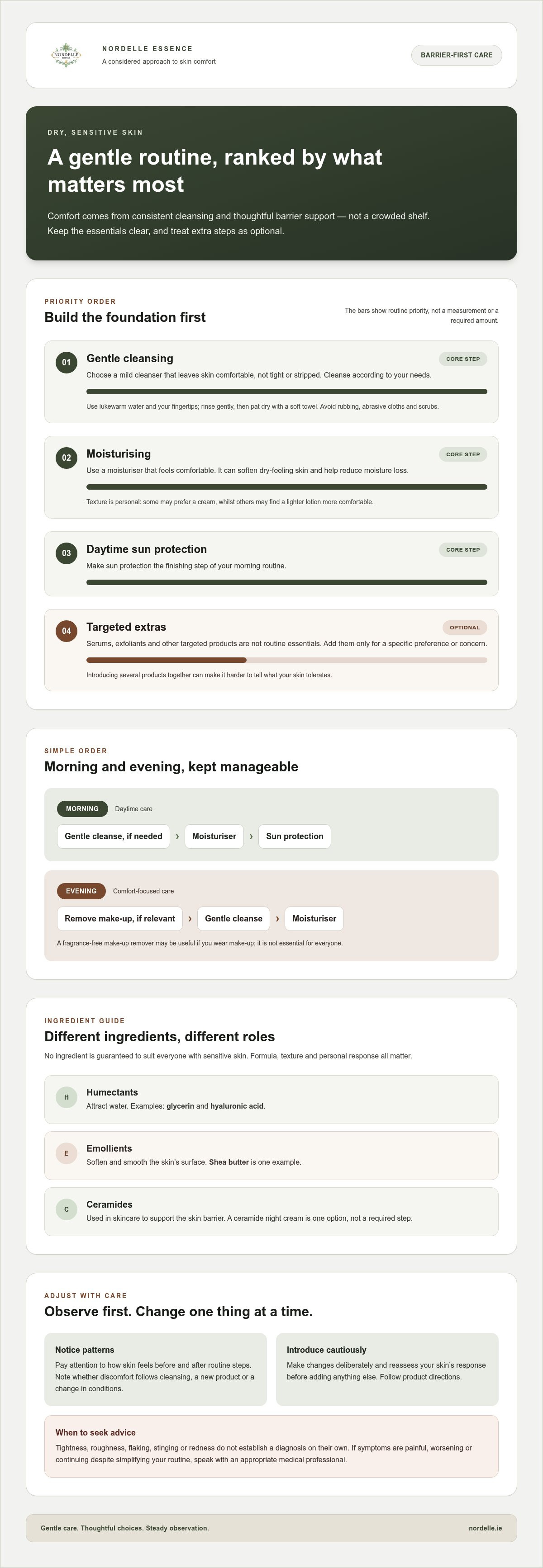
Moisturiser can soften dry-feeling skin and help reduce moisture loss. Different ingredients contribute in different ways. Humectants attract water; glycerin and hyaluronic acid are examples. Emollients soften and smooth the skin’s surface; shea butter is one example. Ceramides support the skin barrier.
No ingredient is guaranteed to suit everyone with sensitive skin. Formula, texture and personal response all matter, so use products as directed and pay attention to comfort after application. A cream may feel more reassuring than a lighter lotion for some people, while others may prefer a less rich texture. Let your skin’s response guide your choice.
In practice, cleanse gently when needed, then apply a moisturiser that feels comfortable. A ceramide night cream is one option, not a required step. Explore barrier-supportive skincare as part of a routine shaped around measured, skin-health-first care.
Which skincare steps and ingredients suit a dry sensitive skin routine?
Keep the foundation clear. A skincare routine for dry sensitive skin can centre on gentle cleansing, moisturising and daytime sun protection, with targeted products treated as optional. A simple order makes each step easier to assess and keeps the routine manageable.
Use these sequences as a flexible guide rather than a universal formula:
- Morning: cleanse gently if needed, apply moisturiser, then finish with sun protection. These steps support comfort and provide daytime UV protection.
- Evening: remove make-up if relevant, cleanse gently and apply moisturiser. A fragrance-free make-up remover may be useful if you wear make-up, but it isn’t essential for everyone.
- Optional: serums, exfoliants and other targeted products can be considered for a specific preference or concern. They aren’t routine essentials, and introducing several together can make it harder to identify what your skin tolerates.
Gentle cleansing, moisturising and daytime sun protection are three useful core steps, although the best routine depends on your skin’s needs and tolerance.
Core morning and evening steps versus optional extras
In the morning, cleansing may be unnecessary if your skin feels comfortable and clean. Follow with moisturiser and sun protection that suit your preferences. In the evening, remove make-up when needed before cleansing, then moisturise. Keep the sequence simple at first. If you add a serum or exfoliant, treat it as an extra, not a replacement for the core steps.
How to assess products without over-restricting your choices
Read the full ingredient list and consider your own history of reactions. Fragrance-free products may be worth considering if fragrance has unsettled your skin, but the label doesn’t guarantee that a product will suit you. Individual reactions are possible with any formulation.
“Natural” or naturally derived ingredients aren’t automatically irritation-free, either. Rather than assuming every ingredient in a broad category is unsuitable, consider the complete formula, follow the product directions and notice how your skin feels after use. If you’re uncertain, keep the rest of your routine steady while assessing a new product.
A ceramide night cream or fragrance-free bi-phasic make-up remover may suit particular routines, but neither is compulsory. Choose according to your needs, and give a simple routine time to feel comfortable before considering optional additions.
How to introduce and adjust a skincare routine for dry sensitive skin
Changes are easier to assess when the rest of your routine stays familiar. Develop a skincare routine for dry sensitive skin gradually, so you can observe how your skin responds without introducing several unknowns at once.
A measured process for introducing a new product
- Simplify first. Keep to a manageable routine using products you already tolerate. This gives you a clearer baseline for noticing changes.
- Add one product at a time. Avoid starting several new products simultaneously. Follow the directions for the product you’re introducing, including how and when to apply it.
- Observe your skin. Notice how it feels after use and over time. A small-area test on a discreet patch of skin may help you assess your response before wider use, but it can’t guarantee that a reaction won’t occur later or elsewhere.
- Reassess before adding more. If the new step feels comfortable, continue to follow its directions and give yourself time to understand how it fits your routine before making another change.
Introduce one product at a time, follow its directions and observe your skin before deciding whether to add another step.
When to simplify the routine or seek advice
If discomfort develops after introducing a product, pause that new step and return to the basics you previously tolerated. This doesn’t establish what caused the reaction, but it reduces the number of changes while you observe whether your skin settles. Avoid trying to compensate by adding several soothing products at once, as that can make the pattern harder to interpret.
A brief, uncertain change is different from symptoms that persist, become painful or worsen. If discomfort continues after you simplify your routine, or feels significant, seek advice from an appropriate medical professional. They can assess your symptoms and discuss suitable next steps without relying on guesswork.
Keep a simple note of what you introduced, when you used it and what you noticed. This can help you describe the pattern clearly if you seek advice and guide more considered choices in future.
As you consider which products may fit your evening routine, explore barrier-supportive skincare.
Build a considered routine with Nordelle Essence
Comfort comes from a routine you can maintain, not from collecting more steps. For a skincare routine for dry sensitive skin, consistency and careful observation are more useful than frequent changes. This measured approach reflects Nordelle Essence’s skin-health-first philosophy, shaped by its evidence-led perspective and focus on barrier support and hydration.
Consider products according to the role they may play in your routine. They’re options, not a prescribed set of steps, and individual tolerance remains important. Start with what your skin needs, then introduce any new addition cautiously.
Where relevant Nordelle Essence products may fit
- Make-up removal: BiPhasic Make-up Remover, Fragrance Free can remove make-up before gentle cleansing when needed. It’s an optional first step, not a requirement if you don’t wear make-up.
- Night-time moisturising: Ceramide Barrier Night Cream is an evening moisturiser option. Consider how its texture and use fit your existing routine, and follow the product directions.
- Daytime care: Sun Protection belongs in a daytime routine. It isn’t a night-time step, but it can complement the care you give your skin during the day.
- Optional targeted care: Retinol Alternative Moisturizer may be considered as an additional product if it suits your needs. It isn’t essential to a simple routine, so avoid adding it alongside several other new products.
These products serve different purposes. You don’t need to use them all. Choosing one relevant step can be a more considered starting point than changing your entire routine at once.
A simple next step for a more considered routine
Keep your routine manageable and notice how your skin feels over time. If a product seems uncomfortable, pause the new step and return to familiar products you tolerate. Persistent or worsening symptoms are a reason to seek appropriate medical advice rather than continuing to add products.
If you’d like to explore options that may fit your routine, explore Nordelle Essence skincare. Choose with care, introduce changes gradually and let comfort guide what stays.
Keep your routine calm, consistent and considered
A comfortable routine doesn’t need to be complicated. Prioritise gentle cleansing, moisturising and daytime sun protection, then consider optional products only when they serve a clear purpose. Introduce one change at a time and observe how your skin responds, rather than judging a product by one moment of tightness or redness.
These principles give a skincare routine for dry sensitive skin a steady foundation: choose manageable steps, follow product directions and return to familiar basics if a new addition feels uncomfortable. Persistent, painful or worsening symptoms deserve advice from an appropriate medical professional.
Nordelle Essence was founded by an aesthetics doctor, with a skin-health-first philosophy centred on barrier support and hydration. Its products can be considered as individual options within a routine, not as steps you need to use all at once. Explore considered skincare for dry sensitive skin and choose what feels appropriate for your needs. A measured routine is a thoughtful place to begin.
Frequently Asked Questions
What is the best skincare routine for dry sensitive skin?
A simple, consistent routine is a useful starting point: cleanse gently when needed, moisturise and use sun protection during the day. In the evening, remove make-up if relevant, cleanse gently and moisturise. Choose products according to your skin’s comfort and introduce changes gradually. The best skincare routine for dry sensitive skin is one you can maintain without unnecessary steps, rather than a fixed sequence that suits everyone.
Can I use active ingredients if I have dry sensitive skin?
Some people with dry sensitive skin can use active ingredients, but tolerance varies. Start with one product, follow its directions and avoid introducing other new products at the same time. If you’re uncertain about an ingredient or have ongoing sensitivity, seek advice from an appropriate medical professional before adding it. Stop using a new step if it causes discomfort, and return to familiar products you tolerate while you assess your skin.
Should I cleanse my face in the morning if my skin is dry and sensitive?
Not necessarily. If your skin feels comfortable and clean, you may prefer to rinse with lukewarm water or skip a full cleanse. If you wake with residue or prefer cleansing, use a mild product and avoid rubbing. Let how your skin feels guide the choice rather than following a rigid rule. In the evening, cleanse as needed to remove the day’s products, make-up or sunscreen.
How often should I moisturise dry sensitive skin?
Many people include moisturiser in both their morning and evening routines, adjusting to what feels comfortable. Apply it after cleansing, following the product directions. You may also find moisturising helpful after washing if your skin feels dry, but there’s no single frequency that suits everyone. Choose a texture you can use consistently, and reassess if a product causes persistent discomfort rather than adding several new products at once.
Is fragrance-free skincare better for sensitive skin?
Fragrance-free products may be a helpful option, particularly if you’ve noticed discomfort with fragranced skincare. However, the label doesn’t guarantee that a product will suit you, as reactions can depend on the full formulation and individual tolerance. Read the ingredient list, introduce a product cautiously and observe your skin’s response. Naturally derived ingredients can also cause reactions, so consider the whole product rather than relying on one label claim.
What should I do if a new skincare product stings?
If a new product stings and the discomfort continues or feels pronounced, stop using it and rinse it off gently. Return to familiar products you’ve previously tolerated, and avoid adding several new steps to counter the reaction. Stinging alone doesn’t identify its cause. If symptoms persist, become painful or worsen, seek advice from an appropriate medical professional. A small-area test before wider use may inform caution, but can’t guarantee a reaction won’t occur.
Can dry sensitive skin use sunscreen every day?
Yes, sunscreen can be part of daytime care for dry sensitive skin. Choose a product that feels comfortable, follow its directions and apply it as instructed to exposed skin. If one formula feels uncomfortable, discontinue it and consider another suitable option rather than abandoning sun protection altogether. Introduce a new sunscreen as you would any new skincare product, one change at a time, so you can observe how your skin responds.